- Ewald’s Laws are 3 laws that describe behaviours of the vestibular system. They were initially described by the German physiologist J.R. Ewald in 1892.
- Ewald’s 3 Laws are:
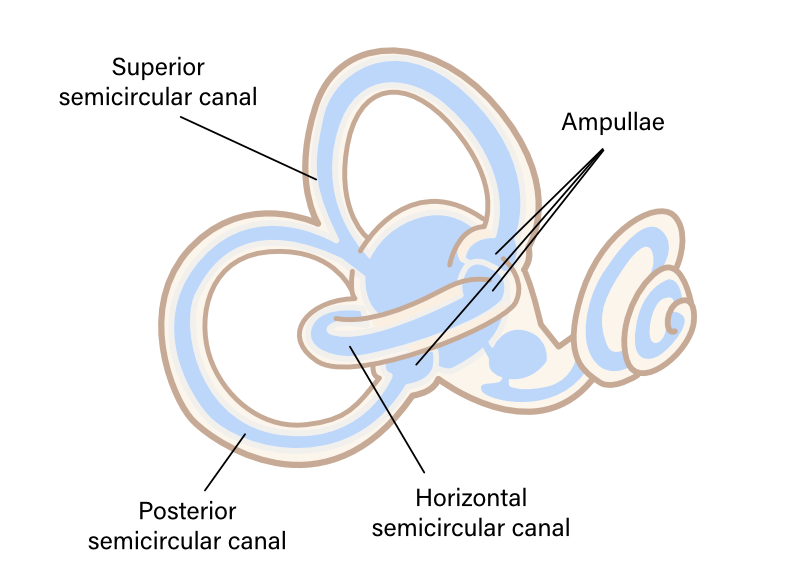
- Ewald’s First Law: Stimulation of a semicircular canal results in nystagmus in the same plane as the stimulated canal.
- Ewald’s Second Law: In the lateral canal, ampullopetal flow (towards the ampulla) causes more stimulation than ampullofugal flow.
- Ewald’s Third Law: In the anterior and posterior canals, ampullofugal flow (away from the ampulla) produces a stronger response than ampullpetal flow.
Last updated October 08, 2022